Metering and metering modes explained
Metering in a camera is how the camera measures light to decide the correct exposure (brightness) for your photo. Your camera analyzes the scene and determines settings like shutter speed, aperture, and ISO (depending on the shooting mode).
What Metering Does
The camera tries to make the image balanced — not too dark and not too bright.
For example:
- Bright sky + dark subject = camera must decide what to expose for
- Portrait in sunlight = camera measures the face and the surrounding light
- Concert or night shots = difficult lighting, so metering matters more
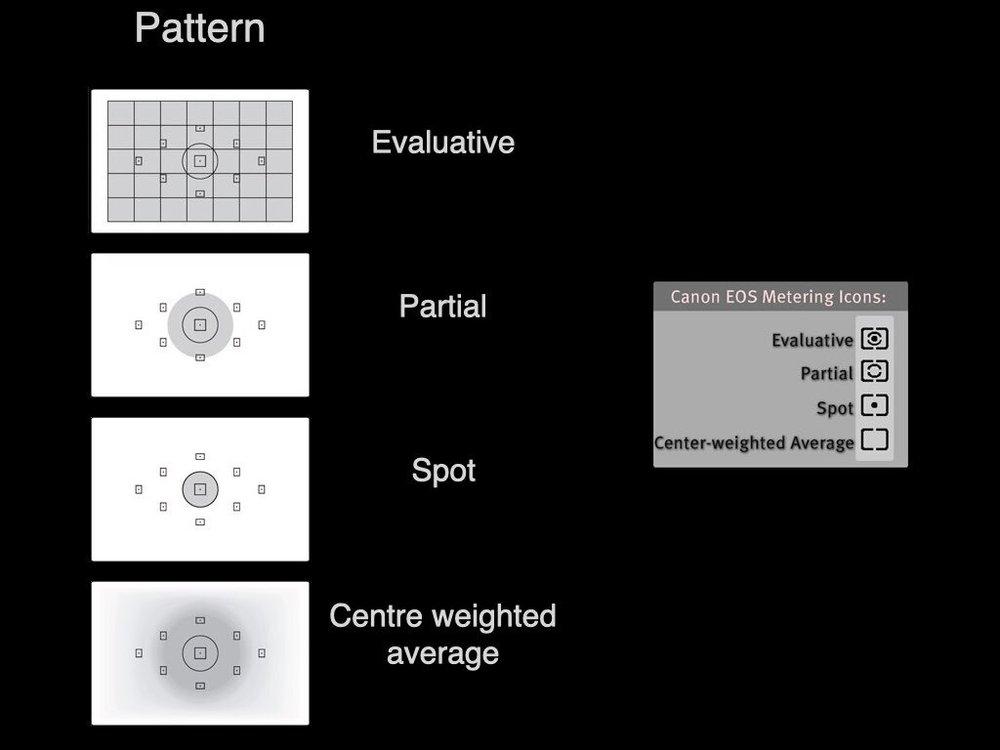
Evaluative Metering (Default / Best General Use)
The camera analyzes the entire frame and intelligently balances exposure.
Best for:
- Everyday photography
- Travel
- Street
- Landscapes
- General portraits
This is the mode most people leave on all the time.
Partial Metering
Like spot metering, but the measured area is slightly larger.
Best for:
- Strong backlighting
- Portraits outdoors
- Situations where spot metering is too precise
Common on many Canon cameras.
Spot Metering
Measures light from a very tiny area in the center (or focus point on some models).
Best for:
- Birds/wildlife
- Concerts
- Moon photography
- Backlit subjects
- High-contrast scenes
Example:
If someone is standing in front of a bright sunset, spot metering lets you expose for their face instead of the bright sky.
Center-Weighted Average Metering
The camera meters the whole frame but gives priority to the center.
Best for:
- Portraits
- Subjects centered in frame
- Consistent lighting
More old-school/traditional style.