Intro to Photography – Types of cameras
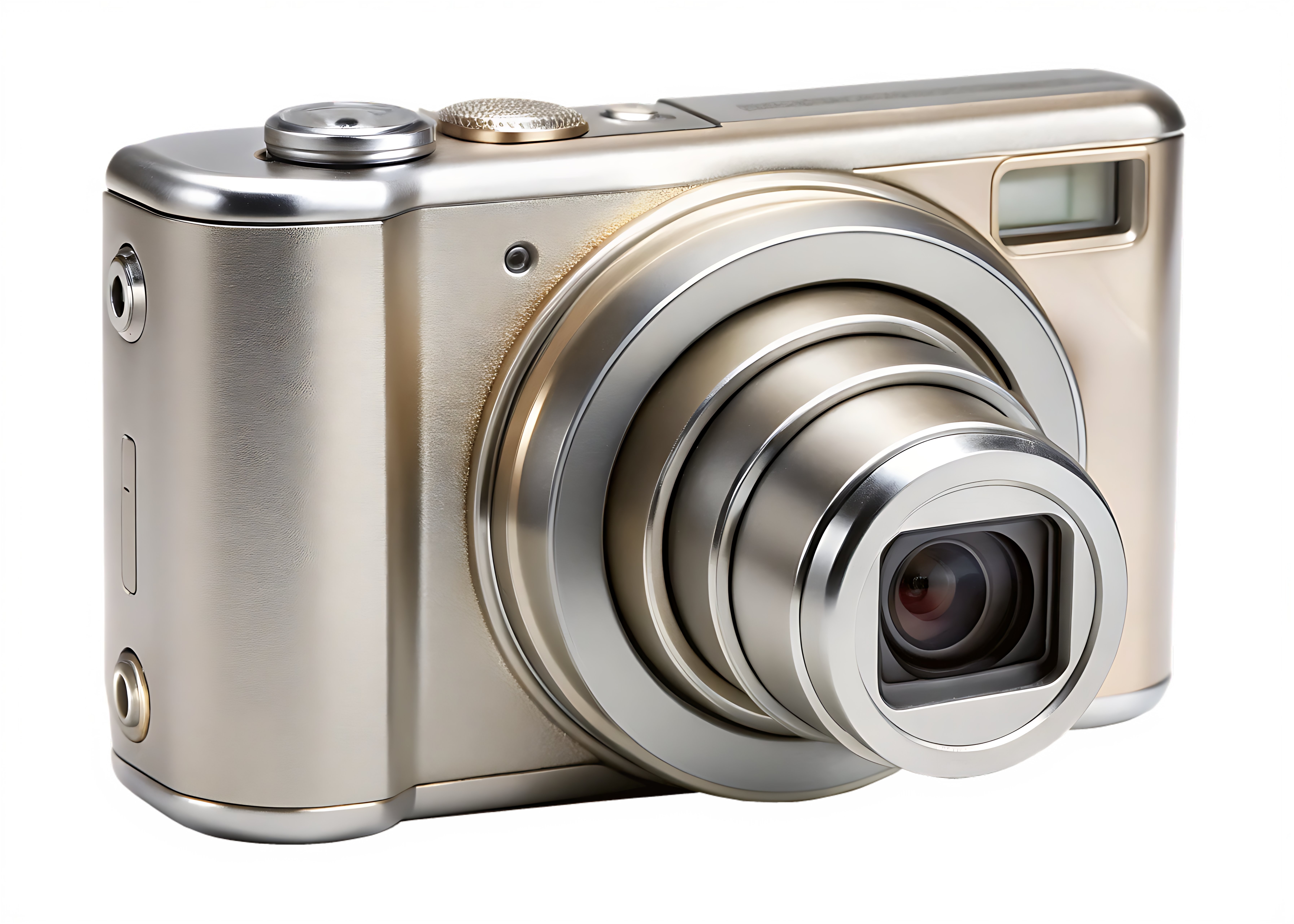
Point and shoot or compact cameras
Cellphone cameras
DSLR & Mirrorless cameras
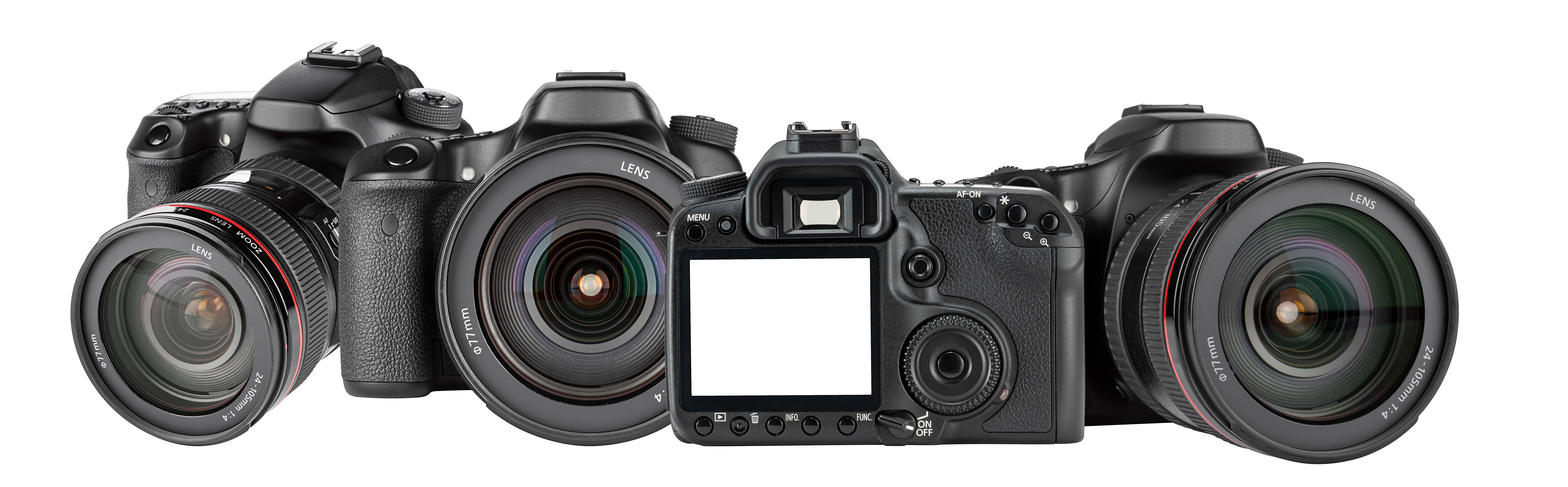
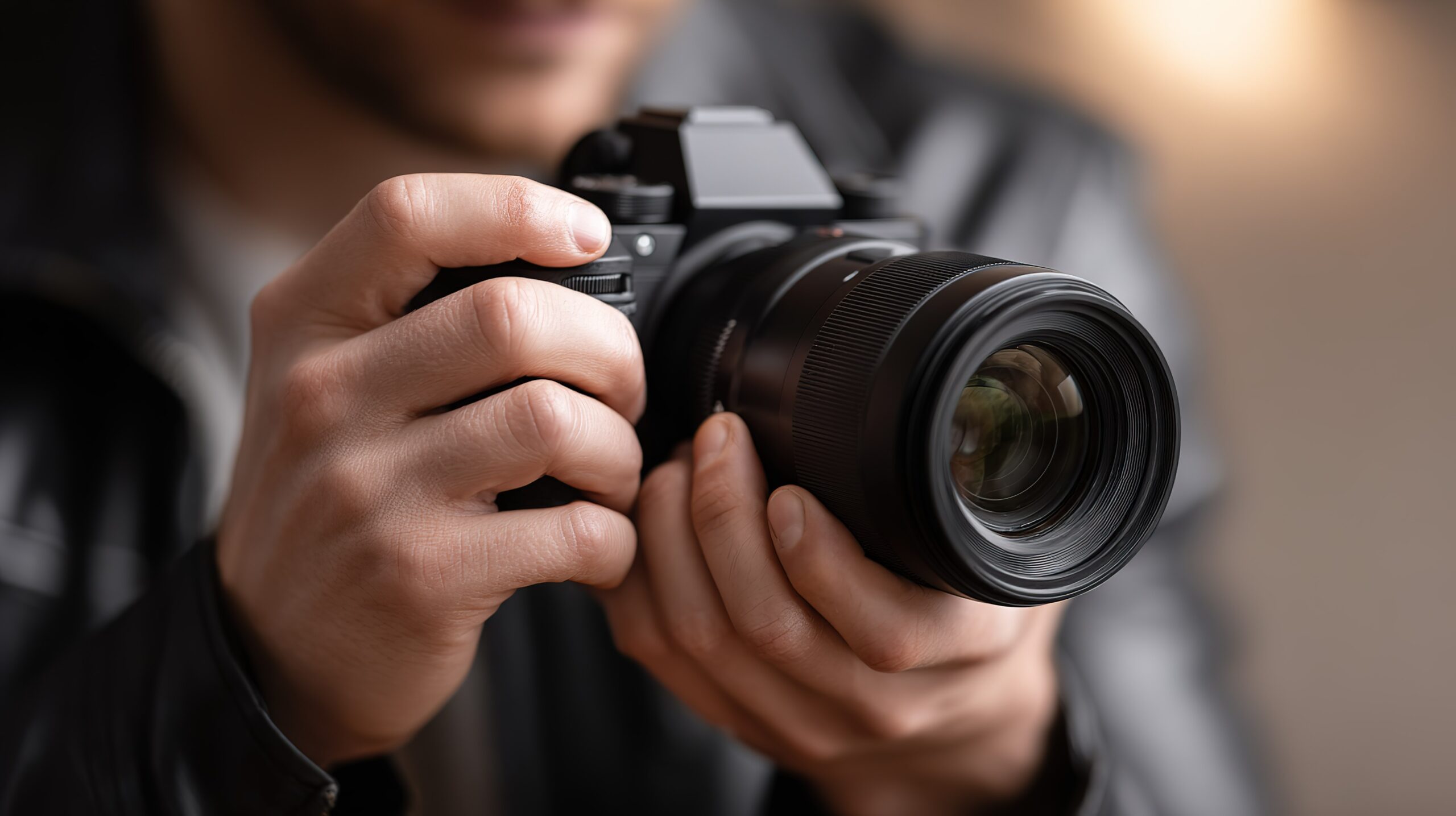
DSLR and mirrorless cameras are advanced cameras designed for high image quality and creative control. They use interchangeable lenses and larger sensors, allowing photographers to capture sharp details and perform well in low-light conditions. These cameras are ideal for users who want greater creative flexibility and professional-level results.
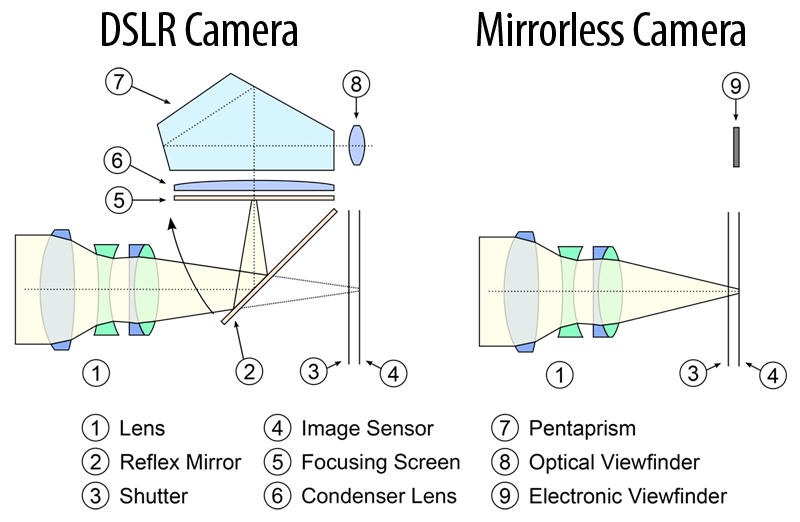
- DSLR Camera – Stands for Digital Single Lens Reflex, which is a type of camera that uses a mirror to reflect light through a lens to an optical viewfinder.
- Mirrorless camera – Many new cameras these days are mirrorless cameras, which means they lack the essence of the DSLR: the mirror. The mirror and prism in a DSLR directs light coming from a lens, and allows you to view your scene through an optical viewfinder. Since mirrorless cameras do not have a mirror and prism mechanism, they do not use an optical viewfinder.
| DSLR Advantages | Mirrorless Advantages |
|---|---|
| Better battery life Optical viewfinder has no delay More used models at a good price In some cases, better at using older lenses | Better video features More advanced autofocus in many cases Actively supported by most manufacturers What you see is what you get (WYSIWYG) viewfinder |
How to hold the camera